
Alex Mart, CMT
Craniosacral Therapy & Gentle Mind-Bodywork
Alex Mart, CMT
Craniosacral Therapy & Gentle Mind-Bodywork
My Story & About This Resource List:
I have recovered from 30+ years of on-and-off chronic pain and symptoms that ranged all over my body. My non-extensive list includes: tension headache, migraine, Irritable Bowel Syndrome, back spasms, neck pain, repetitive strain in my wrists, neuralgia in my foot, hip pain, scoliosis, skin rashes/reactivity, debilitating leg pain that prevented me from walking much more than a block...
It has been a long, frustrating, and costly journey. I felt very alone and very broken through most of it. Some things seemed to work a little bit, or for a little while, some things immediately made things worse. I could never seem to break free and feel well and "normal". I tried everything I could think of that was within my means—from traditional western medicine (scans, Physical Therapy) to alternative medicine and wellness (many kinds of bodywork, massage, chiropractic, acupuncture, meditations, energy healing, diets, psychotherapy, coaching, etc).
I wish this was the information and resource list I could have been given many years ago. I hope it can be a jumping off place for anyone who is stuck with chronic pain or symptoms of any kind.
Pain neuroscience and clinical research have come a long way since the '90s. I believe all bodyworkers and medical providers are responsible for staying current on what we actually know about pain and know how to share resources about resolving—not just managing—chronic pain.
Educate yourself.
Ask your doctors and care team if your symptoms might be neuroplastic. If they don't know what that means, send them here too.
I no longer have chronic pain and have largely healed my IBS. My quality of life, relationships, and mental/emotional worlds are transformed for it. I went from barely walking to dancing, hiking, lifting weights, and moving without fear in less than 6 months. I hope this helps you too.
WHAT ARE CHRONIC/PERSISTENT PAIN (& SYMPTOMS)?
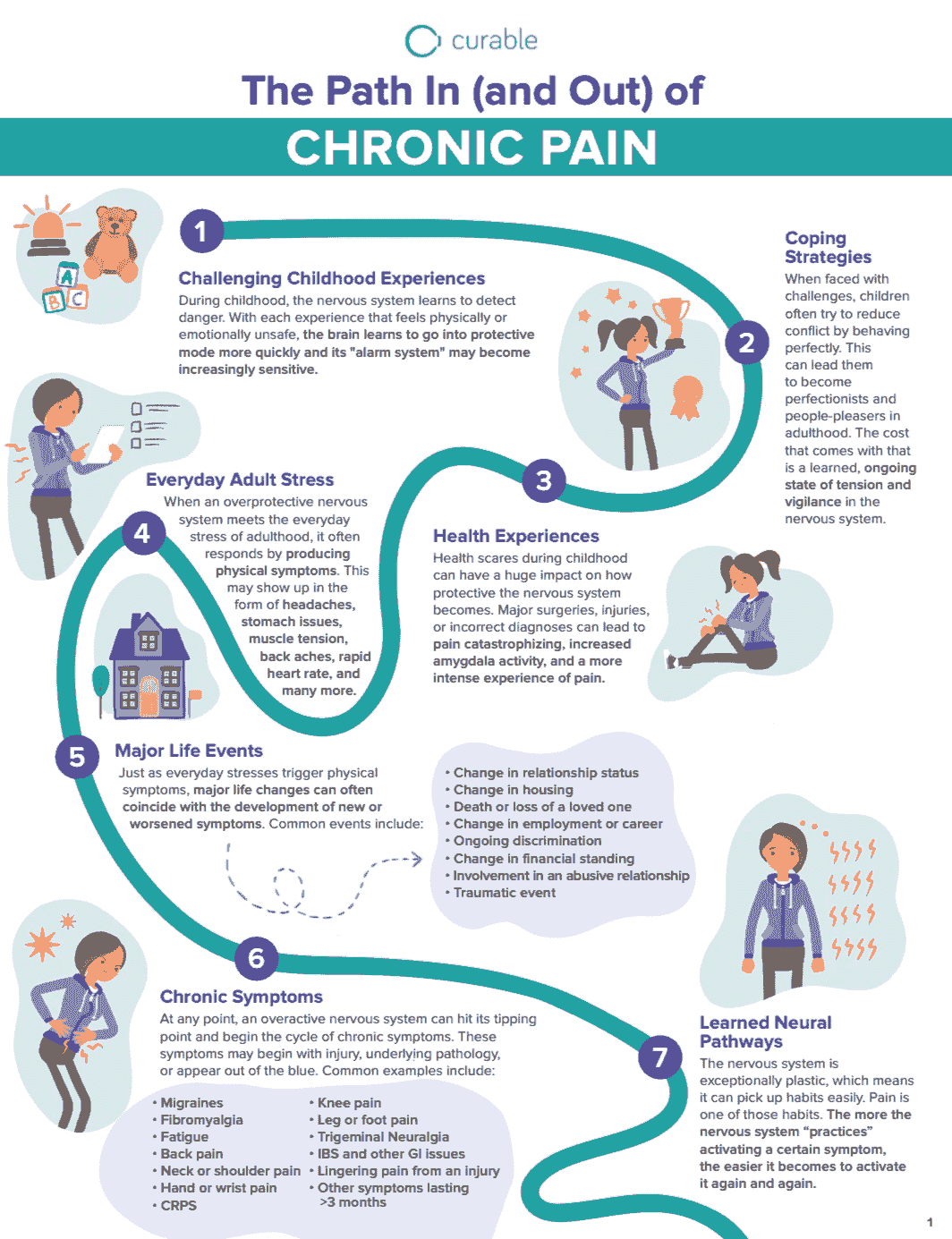
Pain and many of the body's symptoms are protective signals from your brain and nervous system. They tell us to slow down, be more gentle or careful, or stop doing something.
But our unconscious brain (I'm not talking about the conscious mind yet!) can make mistakes and create or keep sending protective pain/signals long after biological healing has completed, or sometimes even without clear injury. This happens especially when the nervous system is stuck in a threat mode or long-term/frequent fight, flight, freeze or fawn.
Nearly everyone has experienced a headache after a stressful day. So we know that stress can create a physical response. But when it goes on longer than we expected, or keeps coming back unexplainably, we can start to worry about the physical body/structure itself. Our medical model is built upon this kind of examination. The neck hurts, examine the neck. But we often lose sight of the understanding we already have that stress and the state of the nervous system can play a role.
Here's where we bridge the gap.
"According to the National Institutes of Health (NIH), about 20.4% of U.S. adults have chronic pain. That means approximately 50 million people have chronic pain in the United States alone. Chronic pain affects more Americans than cancer, heart disease and diabetes combined.” (Mayo Clinic)
WHAT WE KNOW ABOUT PAIN (and some myth-busting):
- The body can experience pain (inflammation, tension, spasm, etc) even in the absence of physical damage or structural problems.
- Even “abnormal” findings on an MRI don’t usually line up with the physical symptoms: 64% of people with NO back pain have disc bulges, protrusions, herniations or disc degeneration. Structural changes/wear and tear are expected with age and are usually unrelated to pain ("wrinkles on the inside").
- Surgeries for chronic pain are often ineffective and are, in many cases, no better than placebo surgeries.
- The unconscious brain is what decides whether we experience pain or not. The body is constantly sending sensory information to the brain, and the brain decides whether it is dangerous (threat=create alarm bells of pain/sensations/symptoms) or not (okay=no need for pain/sensations/symptoms).
- Neuroplastic pain is when the neverous system learns to keep the “alarm bells” on long after structurally-caused pain should have healed/subsided. fMRIs show that pain from injuries show up in a specific part of the brain, but that when pain becomes chronic, it shifts to parts of the brain associated with learning and memory.
- Fear, anxiety, and threat states (fight, flight, fear, fawn) fuel pain: Dozens of studies show that the more fear/anxiety/frustration around the pain/symptom, the more likely the pain/symptom is to continue. This can include general hypervigilance; fear of more pain; fear of movements, activities, and behaviors; fear of losing jobs, relationships, experiences, ability to function; etc.
- People with challenging childhood experiences, trauma, or personalities that are more hypervigilant, perfectionistic, self-critical or put pressure around performance/control, and/or who suppress/avoid emotions, are much more likely to develop chronic pain. The more internalized stress/pressure/intensity, the more heightened the nervous system's default mode tends to be, and the lower the threshold for alarm bells, including pain.
- Curiously (and revealingly), people of different ages, gender, location, and cultures have dramatically different rates of chronic pain and experiences of pain in general.
What about other chronic symptoms? I will often use the term "pain" on this page for simplicity sake, but many other symptoms have been effectively explained and treated using these same methods. Go here for more information about symptoms ranging from fatigue, anxiety, long covid, fibromyalgia, dizziness, POTS, headache, spasms, repetitive stress injuries, etc (or see below for list).
*Feel free to reach out for citations, studies and more info!
Criteria for Evaluating if Your Pain/Symptoms are Neuroplastic:
Whether you have been evaluated and diagnosed with a structural abnormality or disease or not, use this list to determine if your symptom has a neuroplastic component.
- The body can experience pain (inflammation, tension, spasm, etc) even in the absence of physical damage or structural problems.
Understanding Chronic Pain, Symptoms & Anxiety:
A quick crash course on how pain/protective symptoms, the brain and nervous system work.
1. Lorimer Moseley - Why Things Hurt
(brain/nervous system pain science through humor, stories and clinical studies)
2. Chronic Pain and Anxiety: Why Doctors Get It Wrong & How to Hack Your Brain w/Brad Fanestil
(how the nervous system and our perception of threat work and matter)
3. Yonit Arthur, Audiologist - Neural Circuit Dizziness Basics & The Steps to Recover
(applies to any pain/symptom)

Curable:
Click here for a free 6-week trial of the Curable app!
The #1 App for Chronic Pain:
Shown to be effective in an independent randomized controlled trial.
Ranked #1 highest quality app for persistent pain in a large-scale peer reviewed study.Curable is an online program and app designed to help people with persistent pain reduce their symptoms and calm their nervous system, based on Pain Reprocessing Therapy.
Pain is a multifactorial experience, which is why Curable takes a biopsychosocial approach to helping people heal. Curable helps people with pain identify and address the “missing pieces” that are often excluded from treatment plans, including the role of the brain and conditioning of the nervous system.
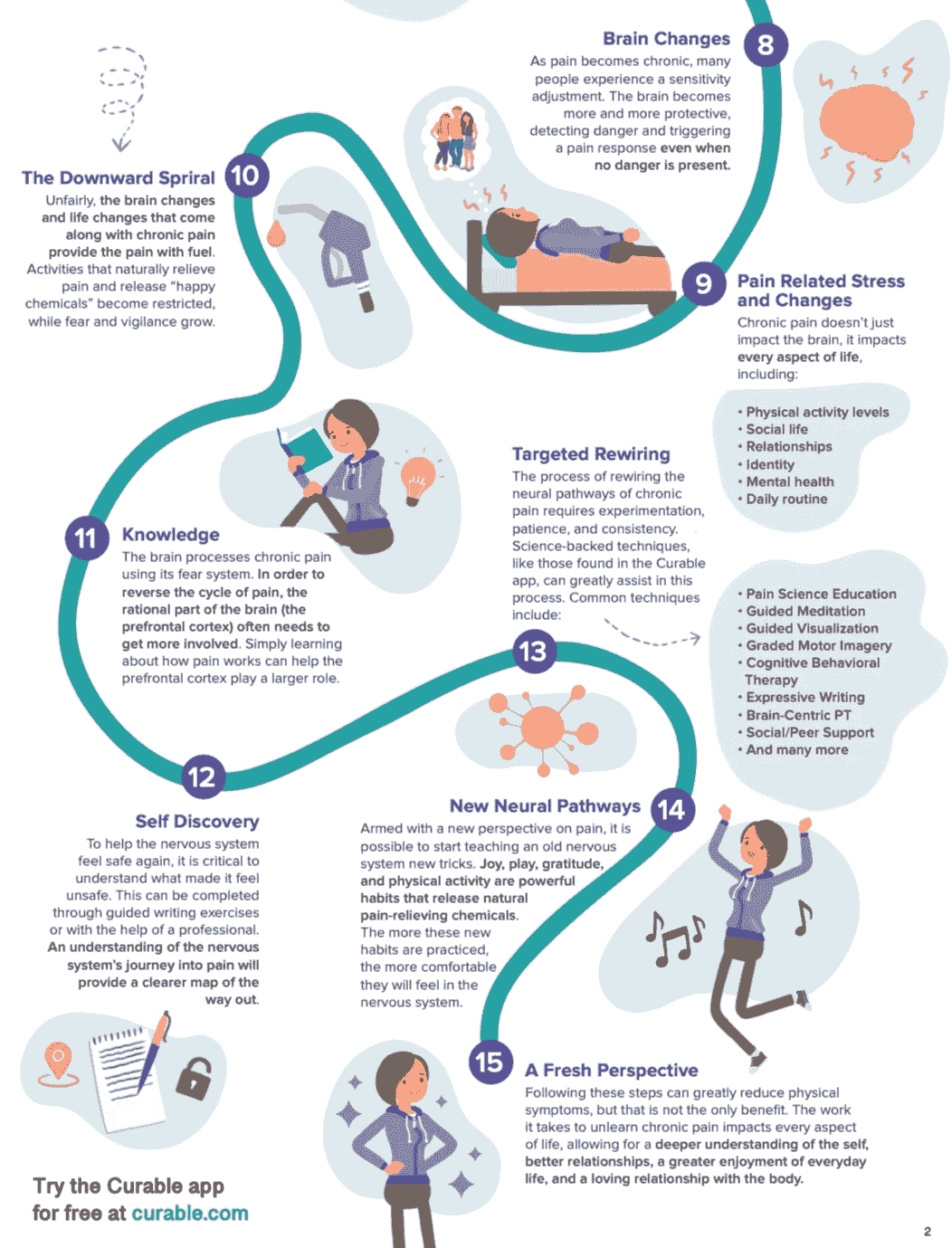
The Curable program guides users through engaging audio lessons about modern pain science and teaches them how to apply a wide range of science-backed techniques to reduce their symptoms, including: somatic tracking, graded motor imagery, cognitive behavioral therapy techniques, guided meditations, pain reduction visualizations, expressive writing techniques, and more.
I do not receive compensation for sharing—I just found this app very helpful in my own learning and healing.Tools, Programs and Practices
Pain Reprocessing Therapy:Pain Reprocessing Therapy —A system of psychological techniques that retrains the brain to accurately interpret and respond to signals from the body, breaking the cycle of chronic pain. Although various treatments aim to manage pain, PRT stands apart as an evidence-based treatment to eliminate pain.
Tell Me About Your Pain—Podcast by Alan Gordon, Alon Ziv & Curable (The podcast that connected the dots for me and changed my life—I binged the whole series in a week and all my pain went away! Not forever... turns out I had to do the inner work! But it showed me what was possible and gave me great hope.)
The Way Out—Book by Alan Gordon - a more in-depth look and systematic presentation of PRT practices, tips, tricks, and pitfalls, including how to handle flare-ups during the healing process
PRT also provides wonderful Practitioner Trainings (learn the latest pain science and Pain Reprocessing Therapy) and run 8-week educational Healing Workshops. I have completed their basic Practitioner Training & Advanced PRT for Manual & Physical Therapists training.
The Protectometer:
By Lorimer Moseley and David Butler of NOI (Neuro Orthopaedic Institute) Group
An EXCELLENT resource for pain education. The Protectometer is a tool for evaluating what is contributing to your sense of threat and safety and more/less pain (contact me for a link to downloadable copies) - Explain Pain Protectometer Handbook -
NOI Group: Global Leaders in Pain Science Education – Transforming Knowledge into Better Care (trainings, resources and more)JournalSpeak (emotions processing through writing):
Mind Your Body book (or listen to the audiobook / free with Spotify premium)
www.yourbreakawake.com - JournalSpeak writing process
JournalSpeak is a targeted, expressive writing tool created by Nicole Sachs to give you agency over your chronic pain. A regular JournalSpeak practice allows repressed emotions and stored trauma to safely rise, eliminating the brain’s protective impulse to send pain signals.As you learn how to develop this tool, you will also rewire your neural pathways and gain awareness, presence, and freedom from chronic pain and anxiety.
--> Enter your email at JournalSpeak link above for instant access to prompts to get started!
The Cure for Chronic Pain with Nicole Sachs Podcast: A great place to hear personal stories from people with a huge range of chronic symptoms and conditions that were resolved with mind-body tools!
Find What Resonates and Connects Your Dots
(other approaches, resources & tools):
Adrian Louw www.whyyouhurt.com "Your Comprehensive Resource for Pain Neuroscience Education"
Gupta Program: "Brain Retraining for Chronic Illness"
The Steady Coach —Dr. Yonit Arthur, AuD: Helping people with chronic dizziness (and other chronic vestibular symptoms) get strong and steady with mind-body approach to healing.
Like Mind, Like Body —Podcast (by Curable): Interviewing top researchers, best-selling authors, and field experts about the astonishing ways the mind can affect the body.
Some Notable Episodes:
--> Non-Pain Symptoms are Curable! w/Yonit Arthur, Audiologist- conversation about vestibular symptoms and how the brain can create or amplify any sensation in any part of the body
--> The Psychology of Pain: Practical Insights for Recovery w/Justin Barker, PsyD
This Might Hurt: Unlearning Pain (with Dr. Howard Schubiner, MD)*I have not seen this film but the website is great place to learn — Dr. Howard Schubiner is one of the primary doctors associated with the Pain Reprocessing Therapy and Emotional Awareness & Expression Therapy, both of which have statistically mind-blowing rates of chronic pain resolution in clinical trials.
--> List of non-pain chronic symptoms that can also be produced by the nervous system, and healed with similar mind-body approaches.
Includes:Anxiety, long covid, chronic abdominal pain and spasms, chronic arm or leg pain, chronic back pain and spasms, chronic neck pain, chronic tendonitis, repetitive strain injury (RSI), complex regional pain syndrome (CRPS), depression, dizziness (including PPPD & MmDS), face pain, fibromyalgia, insomnia, brain fog, irritable bowel syndrome (IBS), painful bladder syndrome (interstitial cystitis), pelvic floor dysfunction, POTS (postural orthostatic tachycardia syndrome), temporo-mandibular joint dysfunction (TMJ), chronic inflammation, tension and migraine headaches, post-concussion syndrome, tinnitus (ringing or distortion in the ears), burning mouth syndrome, vulvodynia, coccydynia, some people with neuropathic pain, trigeminal neuralgia and other neuralgias, post-exertional malaise and chronic fatigue (ME/CFS), some people who are told their chronic pain is due to Hypermobility Ehlers-Danlos Syndrome (hEDS), and conversion disorders/functional neurological disorders, plantar fasciitis/foot pain.
MOTION IS LOTION:
Movement is an essential part of healing any chronic symptom. Getting out of pain is NOT a prerequisite to get moving again, it's actually the contrary—getting moving again is the prerequisite for getting out of pain—with proper pacing, mind-body tools and pain education to reduce fear.
Walking, dancing, pandiculating/stretching, bouncing, shaking, playing... let's talk about what is right for your body! I also have many amazing movement professionals in my roladex!
Very gentle prescriptive (muscle group by muscle group) movement: Clinical Somatics (aka Hanna Somatics/Pandiculation) - great $45 online course that teaches the concepts of pandiculation exercises. Sarah's blog is also a wealth of well-researched information. Here is some specific content I often recommend to people:
– VIDEO: Why Static Stretching Doesn’t Work (And What to Do Instead)—Pandiculate!
– VIDEO: Iliopsoas Release (free 20 min sample sequence, combining multiple exercises found in the course)
LEARN ABOUT YOUR NERVOUS SYSTEM:
Trauma and the Nervous System: A Polyvagal Perspective - 9 min video giving a basic introduction and overview of how trauma, adverse childhood experiences, and chronic stress affects our nervous system and how those effects impact our health and well-being. If you are experiencing persistent pain/symptoms, this illustrates how the nervous system can get stuck in a loop.
VIDEO: Nervous System Mastery 101 w/Jonny Miller (4 youtube videos). Start with: The Truth About How Your Nervous System Operates (polyvagal theory in practice, through a "game of life" lens)
LEARN NERVOUS SYSTEM BASICS: Polyvagal Theory - Deb Dana's Rhythm of Regulation (top collaborator with Stephen Porges to help translate his research into clinical and layperson accessible information)
DEVELOPING INTEROCEPTION (aka INNER-AWARENESS SKILLS): Emotion Sensation Wheels (for nervous system states, adults, kids, trauma/C-PTSD)
PLEASE do reach out about referrals for other modalities and practitioners. I (and my clients) have tried a huge array of therapies, bodyworkers, etc. and I am happy to share more information and referrals.
CONTINUING EDUCATION (for medical professionals, bodyworkers, and therapists of all kinds):
PODCAST: Treating the Brain and the Body w/Charlie Merrill, MSPT / Like Mind, Like Body - conversation about combining manual physical therapy with a mind-body approach
Pain Reprocessing Therapy Applications for Physical & Manual Therapists (19hr CE Training)
The Sarno x Sachs Solution (19hr CE Training) - combining the teachings of Dr. John Sarno and Nicole Sachs, LCSW
NOI Group: Global Leaders in Pain Science Education – Transforming Knowledge into Better Care (live and self-paced courses, resource and clinician list)
-->NOI Group Clinical Discussions on YouTube (great place to start and learn for free)!
ASK ME ABOUT COACHES & THERAPISTS TOO!
I also have a wonderful curated list of nervous system, trauma, somatic, and pain-education informed therapists and coaches I would be very happy to refer you to. Please just reach out.
5270 College Ave #200, Oakland, CA || © 2025 Alexandra Mart


